Purchase confirmed.
Your download links are on their way. Check your email now.
Links expire in 24 hours. Save your files once downloaded.
Resilience, Examined
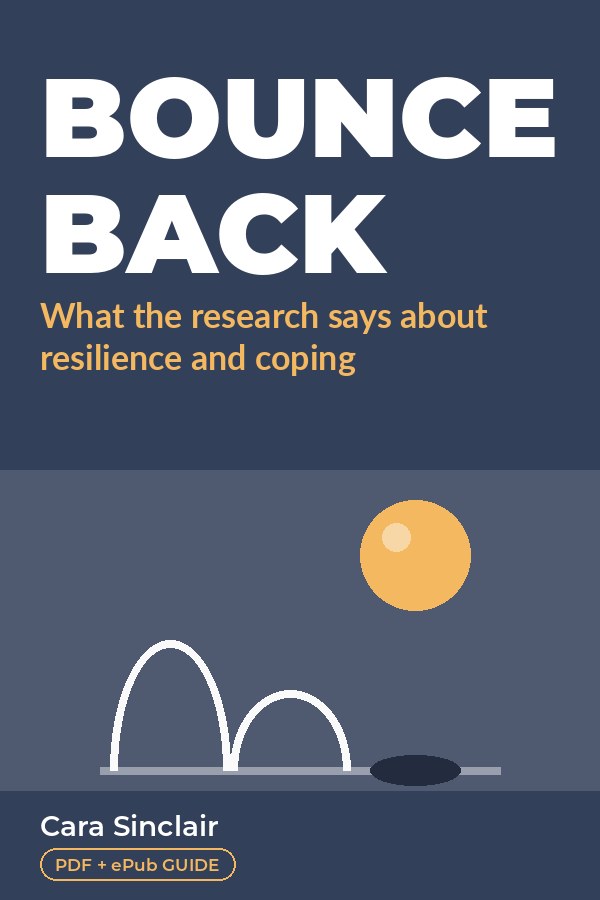
Bounce Back
What the research says about resilience: how it is measured, why most people bounce back from loss, whether training works in person and online, trials with students and workers, social support, and coping under pressure. Twenty-one research chapters that name each study and its size, plus a weekly routine, drills with answer keys and cards to copy. General education, not treatment.
24 chapters · 59 pages · 23 studies cited
PDF + Kindle ePub · Instant download · 30-day money-back guarantee
Buy Bounce Back — $14.99Secure checkout via Stripe
What you get
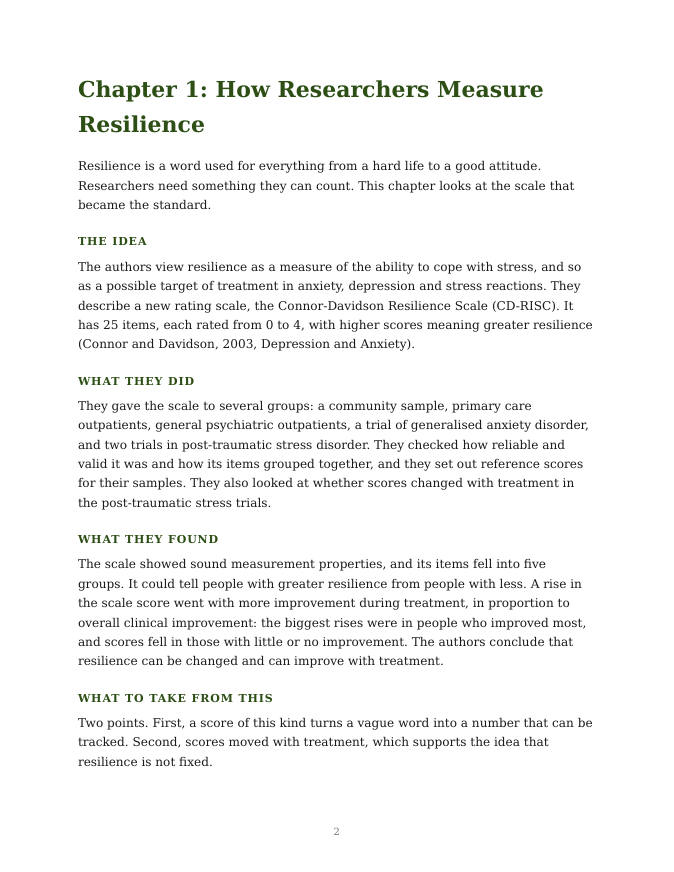
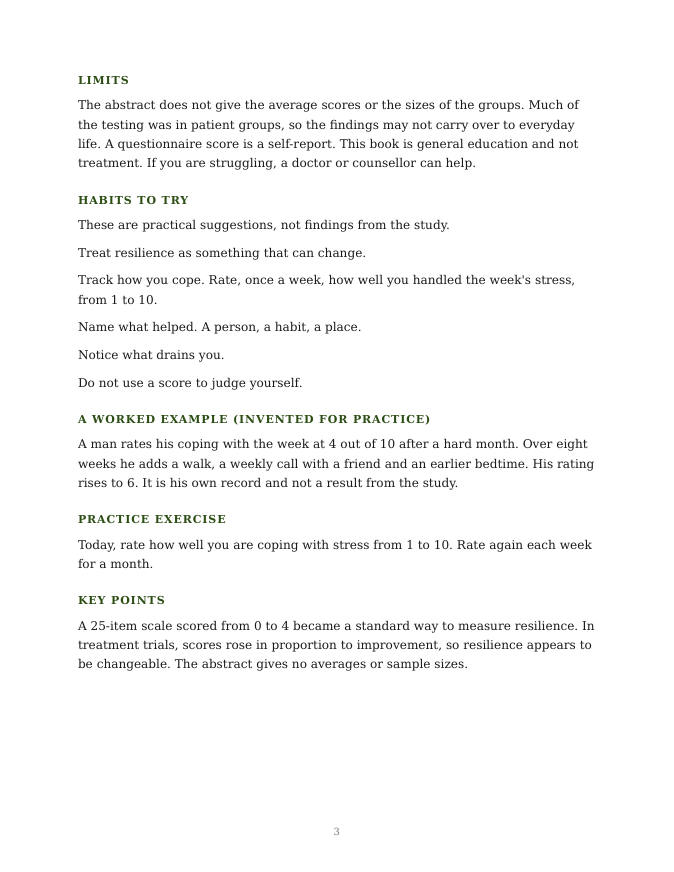
How Researchers Measure Resilience
The 25-item scale that became the standard, and the finding that scores rose with treatment.
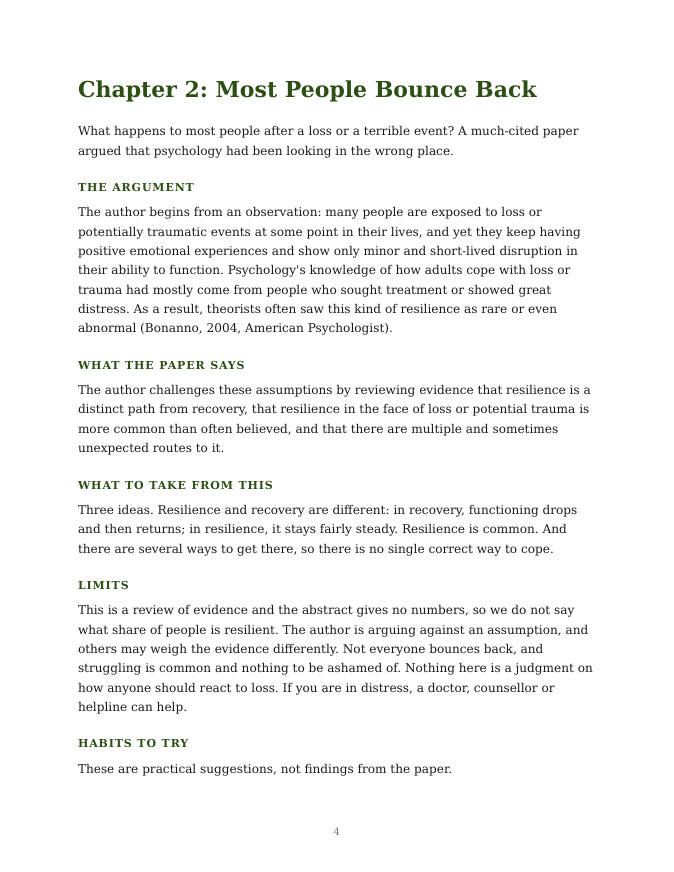
Most People Bounce Back
A much-cited review: resilience after loss is a distinct path from recovery, more common than believed, with many routes.
Can Resilience Be Trained?
11 randomised trials: a moderate average effect (0.44) for CBT-based, mindfulness-based and mixed programmes.
Training by Screen
22 trials and 2,876 people: digital training raised resilience (g 0.54 to 1.09), and flexible internet programmes did better.
A Mindfulness Course for Students
616 Cambridge students: lower distress at exam time, though only 59 percent completed at least half the course.
Three Short Sessions
A pilot trial of 129 college students: more hope, less stress and depression after three 45-minute sessions.
A Short Online Programme at Work
187 French adults, four weeks online: gains in meaning, resilience and stress against waiting.
People Who Hold You Up
A review of social support and resilience to stress, from brain chemistry to clinical practice.
Coping Under Strain: Health Workers in a Crisis
31 studies: coping, resilience and support went with better mental health, and managers are urged to build supportive conditions.
Resilience Training for Doctors: Weak Evidence
Nine studies with usable data, four randomised: no clear winner, very low to low quality evidence.
Video Sessions at Work
81 employees, three conditions: a four-week programme by video did about as well as in person at one month.
Optimism and Health
83 studies and 108 effect sizes: optimism predicted better physical health, with a small average effect of 0.17.
Growth After Illness
57 qualitative studies: changed priorities, personal development and body awareness, and no duty to find a gain.
Resilience Training for Medical Students
21 studies: small-to-moderate average effects on resilience (d 0.39) and stress (d 0.53), with very wide ranges.
Loneliness, Support and Resilience in Later Life
53 studies and 40,929 older adults: support and resilience carried part of the link from loneliness to depression.
How Common Is Growth After Trauma?
26 articles: a combined 52.58 percent reported moderate-to-high growth, with very wide variation.
Growth and Quality of Life After Cancer
37 articles and 7,954 survivors: a link of 0.16 between growth and quality of life, in mostly weak studies.
Resilience in Men With Prostate Cancer
19 studies and 5,417 patients: higher resilience went with less distress, but no trial yet tests training.
Resilience and Confidence After a Heart Procedure
88 patients: higher resilience and self-efficacy went with lower anxiety and depression scores.
Video Stories for Lung Cancer Surgery Patients
A randomised trial of 90 patients: four short videos, then gains in resilience, confidence and quality of life.
A Workshop for Teachers
A pilot with 14 teachers: higher median self-efficacy and resilience after four workshops.
A Practice Routine
Five if-then plans and a light weekly routine, with a note on when to ask for help.
Drills: Score, Reframe, Reach Out
Recovery or steady, fairer thoughts, reading the numbers, claim checks, a support map and small steps, with checked answers. Practice material, not research.
Tools and Glossary
A weekly score card, thought card, support map, hard-week plan, checklist and a glossary of 20 terms. Practice material, not research.
What makes this different
Every research claim names its study
Each research claim names the study and its size where the abstract gave it. A Sources section lists all 23.
Honest about limits
Average effects are moderate, comparison groups are named, and the book says that resilience is not a substitute for fair conditions or for help.
Cards and drills you can use today
A weekly score card, a thought card, drills with answer keys and a support map, labelled as practice material. Not treatment.
Read the first 3 chapters free
Download chapters 1 to 3 before you decide. No email required.
Download free chapters (PDF)Look inside
Real pages from Bounce Back
These pages come straight from the free chapter. The full workbook is written the same way.
Questions before you buy
What do I get?
The full book as a PDF and as an ePub for Kindle and Apple Books. One purchase, one flat price, no subscription.
How do I receive it?
You pay on a secure Stripe checkout page. The download link is sent to your email right after purchase.
What if it is not right for me?
You get a full refund within 30 days of purchase, no questions asked. Email the address in your confirmation message.
Can I read a sample first?
Yes. Get Chapter 1 free by email and read it before you decide.
Get Bounce Back
PDF + ePub. Instant download. 30-day guarantee.
$14.99Buy Bounce Back — $14.99Secure checkout via Stripe. 30-day money-back guarantee.