Purchase confirmed.
Your download links are on their way. Check your email now.
Links expire in 24 hours. Save your files once downloaded.
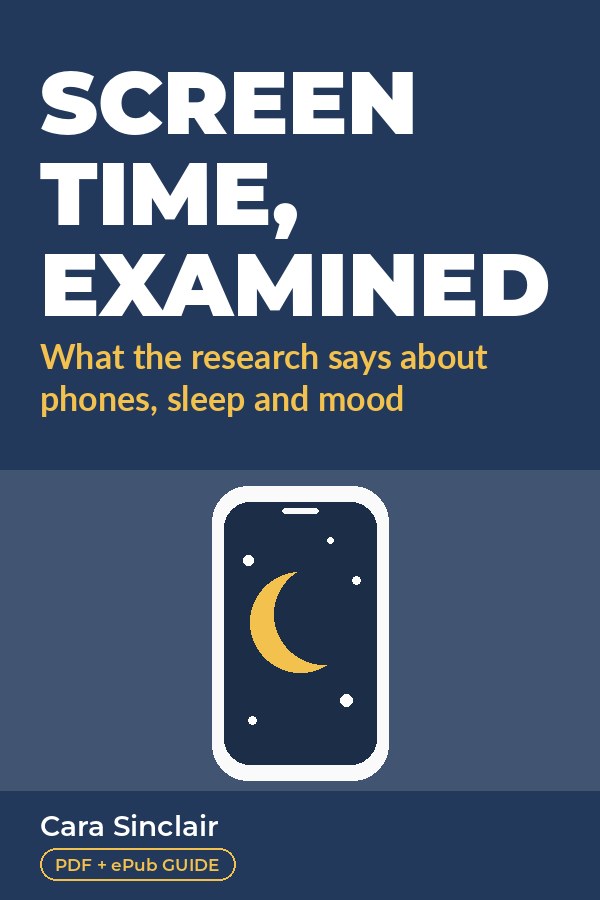
Screen Time, Examined
Screen Time, Examined
What the research says about screen time: sleep, heavy phone use, low mood, teenagers, school marks, children's weight and what helps people cut back. Twenty-two research chapters that name each study and its size, plus a weekly routine, drills with answer keys and cards to copy. General education, not treatment.
25 chapters · 60 pages · 23 studies cited
PDF + Kindle ePub · Instant download · 30-day money-back guarantee
Buy Screen Time, Examined — $14.99Secure checkout via Stripe
What you get
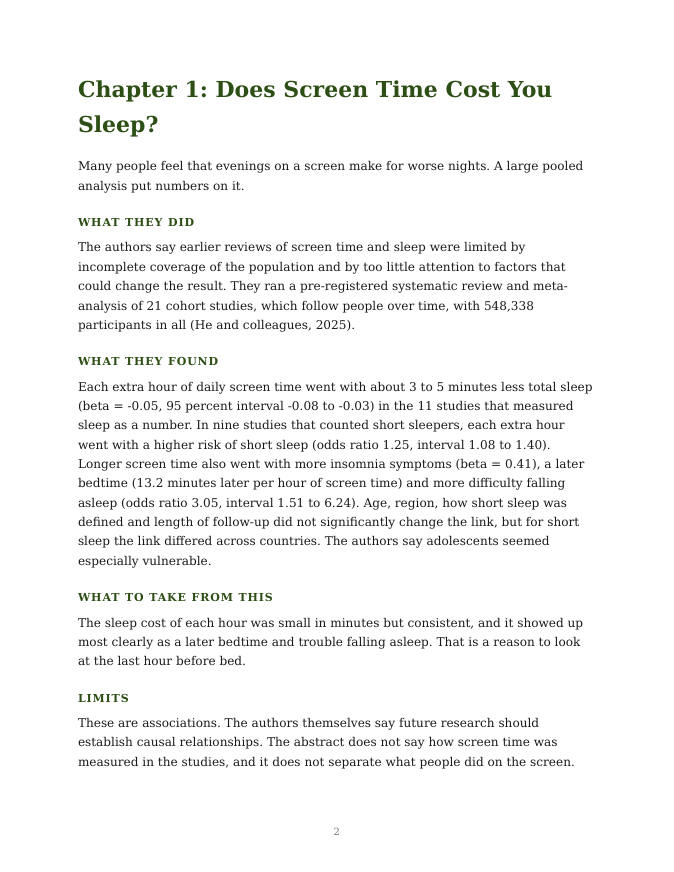
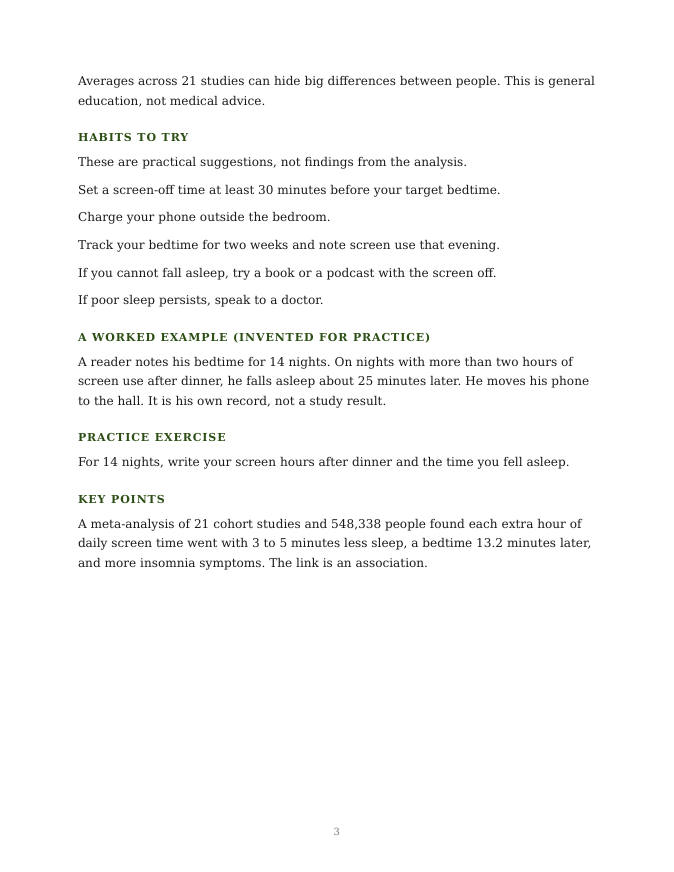
Does Screen Time Cost You Sleep?
21 cohort studies and 548,338 people: each extra hour went with 3 to 5 minutes less sleep and a bedtime 13.2 minutes later.
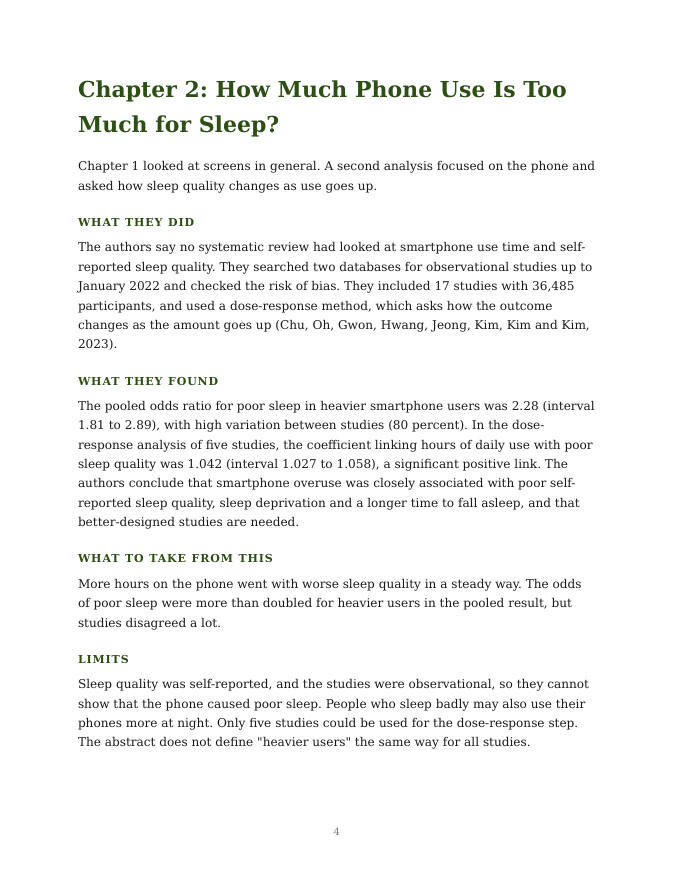
How Much Phone Use Is Too Much for Sleep?
17 studies and 36,485 people: heavier phone use went with poor self-reported sleep (odds ratio 2.28).
When Phone Use Becomes a Problem
Two reviews: problematic phone use went with poor sleep, low mood and worry, most consistently with depression.
Screens and the Risk of Low Mood
19 studies: more screen-based sitting went with a higher risk of depression (odds ratio 1.28), clearer in women.
Following Young People Over Time
35 longitudinal studies: the link between screen time and later low mood was small to very small.
Teenagers and Screens: A Wider Review
50 articles: many links, especially for social media and in girls, with no pooled size.
Phones and School Marks
29 studies and 48,490 students: a small negative link (r -0.110) with academic achievement.
Screens and Children's Weight
16 studies: 2 or more hours a day went with higher odds of overweight or obesity (odds ratio 1.67).
What Helps Children Cut Back?
204 studies: a small average effect, larger with goals, feedback and planning.
School Programmes That Cut Screen Time
16 randomised trials and 8,785 children: a significant reduction (standardised mean difference -0.25).
What the Community Guide Review Found
49 studies: children cut 26.4 minutes a day and three adult groups cut 130.2 minutes.
A Trial With Teenagers: Both Groups Cut Back
322 adolescents: both groups cut screen time and the difference between them was not significant.
A Mindfulness Group for Phone Overuse
A pilot with 70 students: an 8-week group went with less phone use, lasting to week 20.
The Youngest Children and Sleep
31 papers: screen time went with poorer sleep in infants, toddlers and preschoolers, though the evidence was rated very low quality.
Which Screens, and for Whom?
70 studies of young people: television was less strongly linked with low mood than other kinds of screen sitting.
Phone Overuse and Attention Problems in Teenagers
4,512 Korean teenagers: 7.5 percent scored as phone addicted, and attention symptoms had the highest odds (6.43).
How Common Is Problem Phone Use?
109 studies and 97,748 people: a pooled 37.1 percent scored as problem users, rising over 2012 to 2022, with wide variation.
Eating in Front of a Screen
Ten laboratory trials: screen time without food adverts was consistently linked with eating more.
Quality of Life and Problem Phone Use in Young People
Nine articles: problem phone use was almost consistently linked with lower quality of life and well-being.
A Family Programme for Overweight Children: No Clear Effect
251 children: a 20-week home programme did not significantly change screen time or BMI z-score.
Starting Early: Infants and Screens
279 first-time mothers: a parenting programme cut infant screen time, but the difference faded after age 1.
Video Games and Thinking Skills
133 studies and 14,245 people: a small but significant link with memory, spatial ability and attention.
A Practice Routine
Five if-then plans and a light weekly routine, with a note on when to ask for help.
Drills: Read the Numbers, Check the Claim, Cut Back
Matching studies to results, a simple sum, links versus causes, goal setting and claim checks, with checked answers. Practice material, not research.
Tools and Glossary
A weekly screen card, screen-off plan, urge log, goal card, checklist and a glossary of 18 terms. Practice material, not research.
What makes this different
Every research claim names its study
Each research claim names the study and its size where the abstract gave it. A Sources section lists all 23.
Links are not causes
The book says where a result is a link measured once, and where studies followed people over time or ran trials.
Cards and drills you can use today
A weekly screen card, a screen-off plan, drills with answer keys, labelled as practice material. Not treatment.
Read the first 3 chapters free
Download chapters 1 to 3 before you decide. No email required.
Download free chapters (PDF)Look inside
Real pages from Screen Time, Examined
These pages come straight from the free chapter. The full workbook is written the same way.
Questions before you buy
What do I get?
The full book as a PDF and as an ePub for Kindle and Apple Books. One purchase, one flat price, no subscription.
How do I receive it?
You pay on a secure Stripe checkout page. The download link is sent to your email right after purchase.
What if it is not right for me?
You get a full refund within 30 days of purchase, no questions asked. Email the address in your confirmation message.
Can I read a sample first?
Yes. Get Chapter 1 free by email and read it before you decide.
Get Screen Time, Examined
PDF + ePub. Instant download. 30-day guarantee.
$14.99Buy Screen Time, Examined — $14.99Secure checkout via Stripe. 30-day money-back guarantee.